
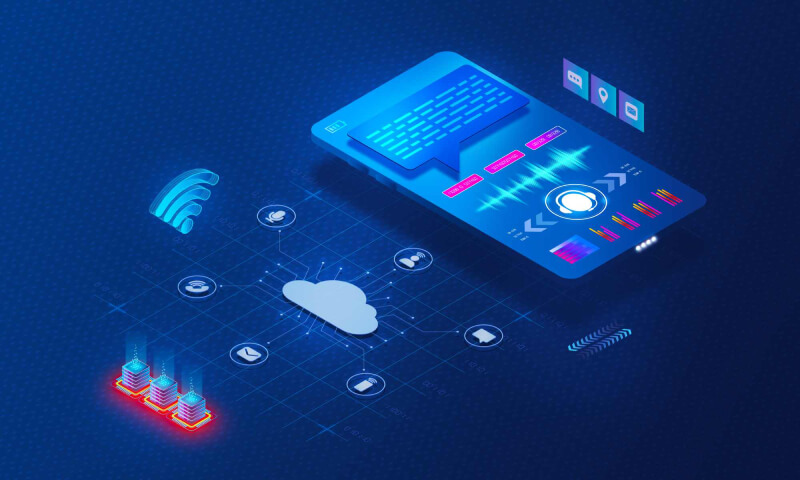
Mobile VoIP and Unified Communications: Supporting Remote and On-the-Go Workforces
57% of workers now rely on smartphones as part of doing business every day. If they aren’t part of your unified communication strategy, you’re missing out. And that’s just one way your employees work. They switch between devices and platforms throughout the day, and they’re no longer tied to a desk phone or a single office location. You need a communication system that can move with you, regardless of where someone is working.
Mobile VoIP is the solution, enabling your employees to make and receive business calls on smartphones, laptops, and connected devices wherever they’re working. Using VoIP mobile apps, they can access the same business tools they have at their desk. Calls, messaging, conferencing, and collaboration tools remain connected through a centralized cloud-based platform.
It also enables the use of a business phone number when they’re doing work. So, even if they’re using their own personal device, they don’t have to give out their personal cell numbers to clients. When they place a call through the VoIP mobile app, customers see the business caller ID.
Enterprise-Level Communication Features for Businesses of Any Size
One of the biggest advantages of today’s mobile VoIP systems is that businesses no longer need enterprise-sized budgets to access advanced communications technology. Features that were once reserved primarily for large corporations with expensive PBX infrastructure are now available to any business through cloud-hosted communications platforms.
You can get:
- Auto attendants that route callers to the correct department or phone
- Call forwarding across multiple devices and locations
- Video conferencing for remote collaboration
- Ring groups that enable teams to answer calls collectively
Mobile VoIP: The Solution for Remote and Hybrid Teams
Remote and hybrid employees still need consistent access to customers and business communication tools regardless of location. Mobile VoIP platforms enable employees to answer business calls, join meetings, transfer calls, and collaborate seamlessly.
Here are just a few examples of how this works in practice:
- A field service tech working at multiple job sites can receive customer calls through a VoIP mobile app while traveling between appointments.
- An employee working from home can answers calls at home, connected to your company’s CRM to call up customer data automatically.
- Sales teams can participate in video meetings from mobile devices while remaining connected to your company phone system.
VoIP Mobile Apps Improve Productivity
Soft phone apps on mobile phones, laptops, and other connected devices help employees respond faster and collaborate more effectively.
Faster Communication Across Devices
Mobile VoIP enables users to transition between smartphones, laptops, tablets, and office phones while remaining connected to the same communications platform.
Employees can:
- Answer calls remotely
- Access voicemail instantly
- Join meetings from mobile devices
- Transfer calls between devices
- Stay connected outside traditional office environments
Simplifying Collaboration for Distributed Teams
Distributed workforces can struggle when communication systems are fragmented. Employees may use a desk phone for calling, Slack for internal messaging, texting for clients, and a number of platforms for collaboration. It’s inefficient and can lead to missed opportunities.
Unified communications simplify collaboration by centralizing communication tools into one hosted environment.
Supporting Business Continuity
Mobile VoIP systems also help your business keep running even when there’s a disruption. Let’s say the power goes out at your main office or a natural disaster forces you to close for the day. Because communication tools are cloud-hosted, employees can continue accessing calls, meetings, and collaboration tools by simply switching to mobile VoIP apps at a different location.
Key Features in Mobile VoIP Solutions
When you’re considering mobile VoIP platforms, there are a few key features you’ll want to make are included, such as:
- Cross-device compatibility: Supports smartphones, tablets, laptops, and desk phones.
- Mobile business calling: Make and receive business calls from anywhere.
- Video conferencing: Helps support collaboration across hybrid and remote teams.
- Call routing and transfer: Improve communication continuity and customer responsiveness.
- Scalability: Enables organizations to support growing remote and mobile workforces.
- Managed support: Reduces administrative burdens on internal IT teams.
Xobee Hosted Voice and Mobile Unified Communications
Xobee’s hosted voice and unified communications solutions support remote, hybrid, and distributed workforces through a central platform. Xobee provides enterprise-grade cloud VoIP phone systems, mobile integration services, advanced call management solutions, and unified communications platforms to simplify your workflow and keep everyone connected.
For a limited time, ask about free phones and free installation when switching to Xobee hosted voice. Call us or contact Xobee for a quote and see how mobile VoIP and mobile unified communications solutions can help your workforce stay connected from anywhere.
